Another Olympics is in the books, and as usual I didn’t get to watch much, but what I did see, I’ll remember as some of my most cherished spectator-sport memories.
For those who’d rather watch/listen to this story!
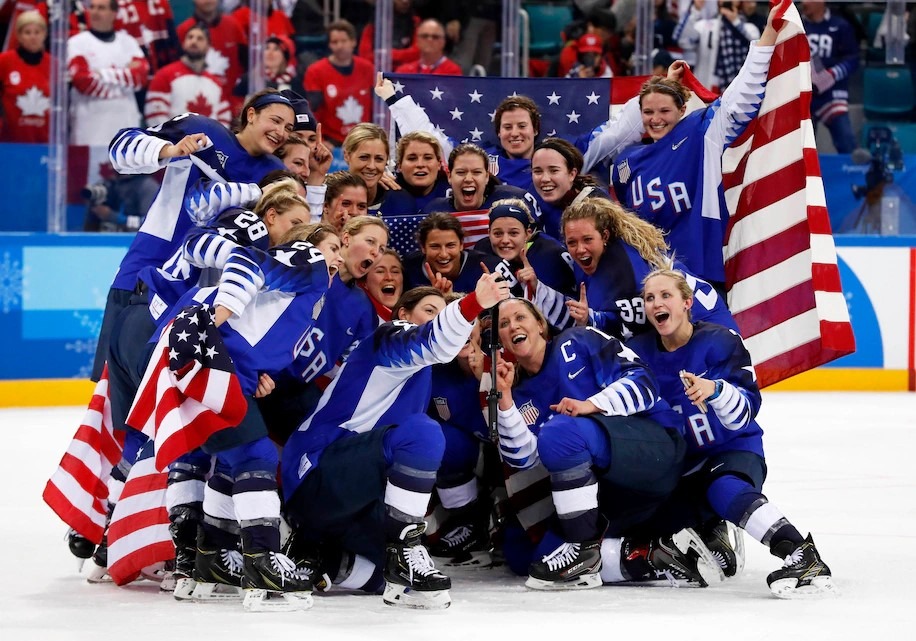
I missed the women’s game gold-medal win because of a gig, but then I got my Saturday event all unloaded and truck returned by midnight so I could sit with the kids and watch the Sunday morning men’s game. It was one of the best hockey games ever played, with so many individual dramatic moments almost out of The Mighty Ducks.

Alyssa Liu’s gold-medal-winning performance was the coolest skate I’ve ever seen, and being born in ’82, as a kid we watched every Olympics glued to the set when women’s figure skating was on. It wasn’t because of her flawless technical performance — she was joyous, loose, free-flowing and creative during her skate like you rarely see. You could see she felt completely true to herself, which as a byproduct fuels a person’s focus like nothing else.
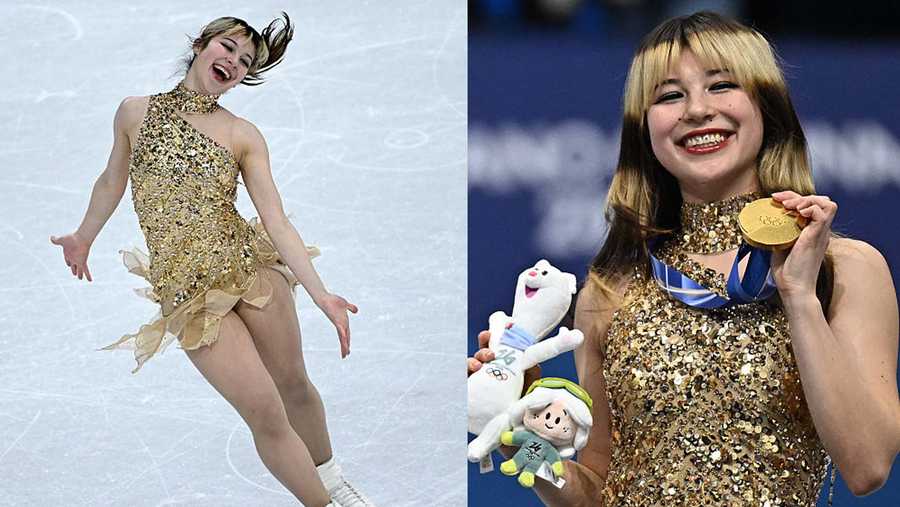
Learning of her incredible story — debuting as a 13-year-old phenom, retiring as a teen, and a recent return when she discovered how to make skating a love and an art and not an obligation or duty — obviously I was inspired and touched.
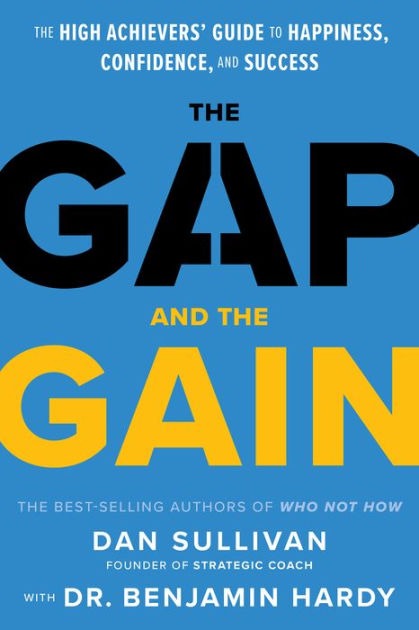
It most directly made me think of another one of the great U.S. Winter Olympic storybook endings. I just read about it last year, in a book my business coach recommended, called The Gap and the Gain, which is about making yourself happy, motivated and productive by measuring yourself against how far you’ve come, not by what you haven’t done or don’t have yet. His story opens the book.
Dan Jansen was one of the most famous American Olympians of the ’80s and ‘early 90s — a speedskater destined for multiple golds. A favorite in most of his races at the ’88 Olympics, he deserved them; he just couldn’t seem to win them. 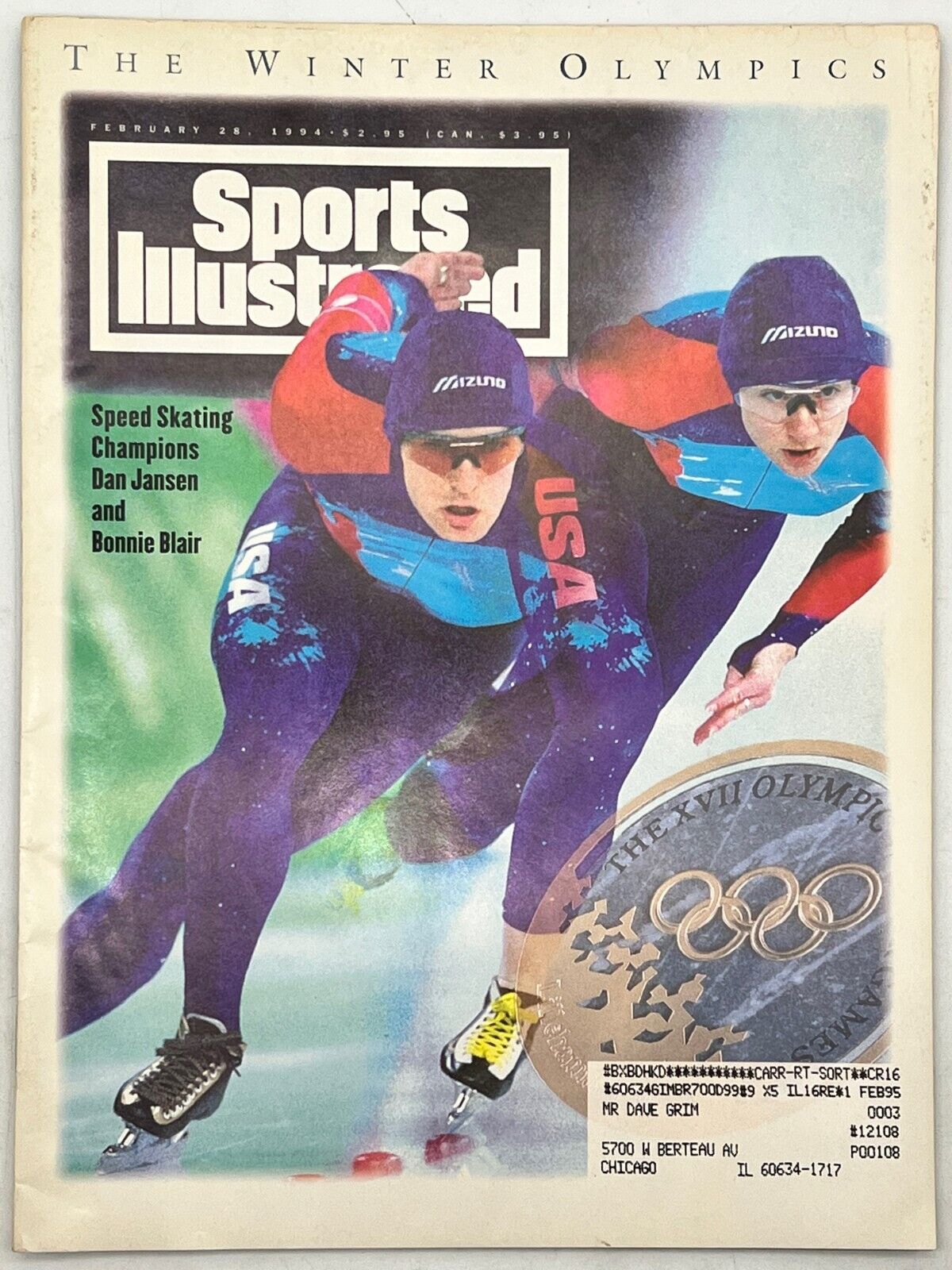
Over and over, a slip or a fall kept derailing him in actual Olympic competition. To make matters much worse, Jane, his 27-year-old sister and a mother of 3, died of cancer the day of one of his Olympic races.
I could imagine the frustration not only of his failures, but because of the feeling I’m sure he had that he had to win one for her. There’s nothing more crushing than feeling like you’ve let others down — people who believe in you, push you, trust you, and inspire you.
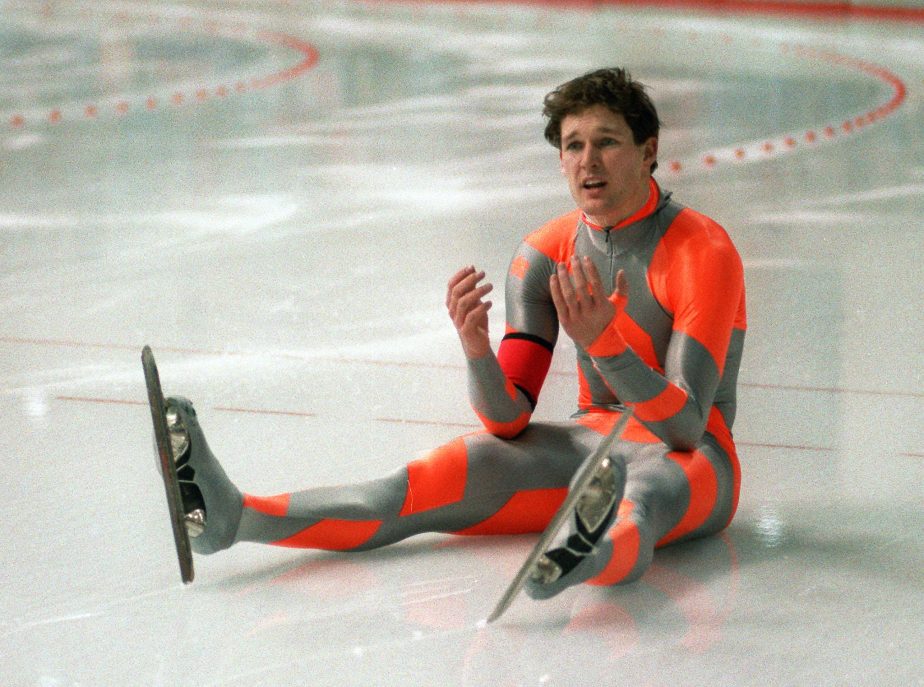
In 1994, his final Olympics, he again lost every race. His last chance, ever, at a gold was suddenly upon him, and it was his weakest event. The kid ’84 who’d made a huge splash and then became the best in the world I’m sure would never have believed that a decade later he was going to spend the rest of his life without a single Olympic gold or his cherished sister.
The book describes what Dan changed for that race.
Rather than thinking of the medals he “should” have earned and “needed” to feel successful, he thought about the good — the coaches, friends and family behind him, the incredible experiences taking part in the Olympics — all the love he’d received and how thankful he was for everything.
Per the book, “He decided his final Olympic event would be an expression of gratitude… At that point, it didn’t matter if he won or lost.
“Throughout the race, he was beaming a huge smile. He later said it was the best he’d ever skated in his life.”
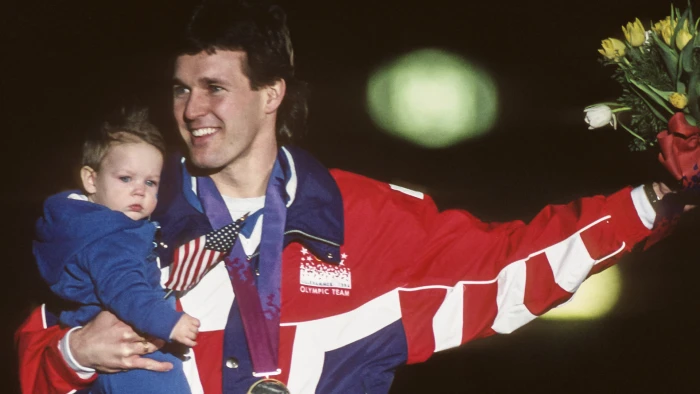
He broke the world record that race, and the joy of accepting his first gold medal around his neck was probably only topped by the victory lap he took with his baby girl, Jane, in his arms.
I’ve been fortunate that I’ve never lost someone close to my age, but my grandparents, who helped raise me along with my mom, are long gone. My grandpa, Paul Hatala, was an ace in World War II, and he’d wanted to be an engineer. He could have gone to school for free under the G.I. bill, but my great-grandma (who is less fondly remembered by my family) made him work immediately upon coming home.
He did eventually become a middle manager at IBM and a skilled technician, but his heart always lay with engineering.
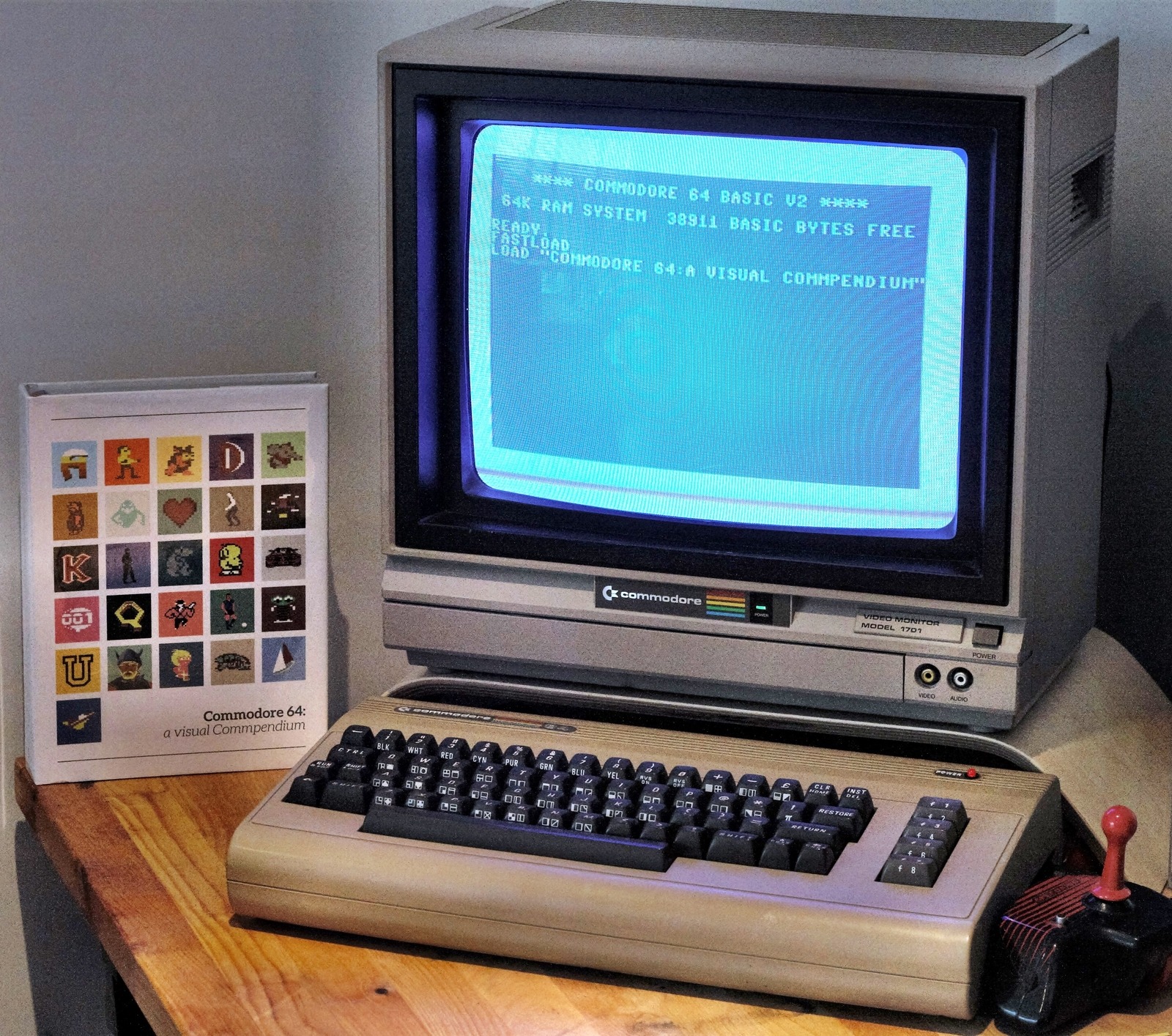
Always interested in cutting-edge technology, he brought home a Commodore 64 computer in 1986. I was four, and it was immediately about 100 times better than our Atari 2600.
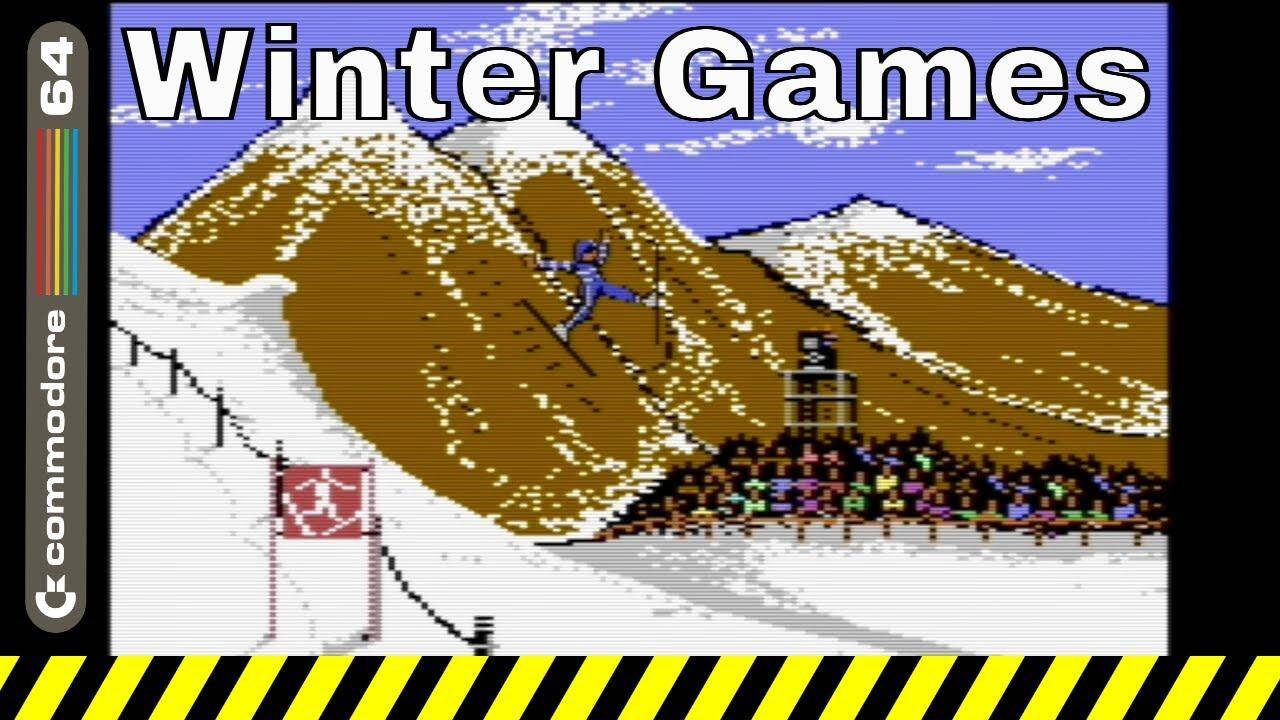
Two of the best Commodore games ever were Epyx’s Winter Games and Summer Games. They featured a crude rendition of John Williams’s arrangement of the Olympic theme (most certainly used without permission) for a demo of opening and closing ceremonies, a bunch of events making for a variety of gameplay challenges, and the ability to represent many countries around the world.
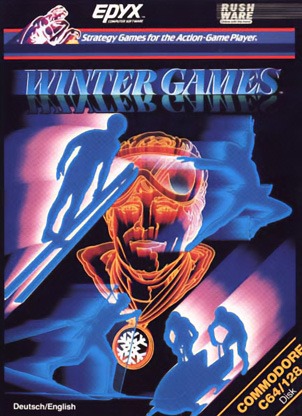
It really helped me as a kid to have a frame of reference when the Games came on in real life, since I could better understand how those specific events depicted in the games worked and were scored. And they taught me basic world geography, as I wanted to know what the cool symbols and their accompanying jingle meant when selecting one (i.e. the countries’ flags and national anthem).
I still have a special connection to the specific events portrayed in these decades-old computer games when I see them live every four years in real life. I still call the ski event where they rocket off a ramp and do mid-air tricks the “hot dog” because that’s what it’s called in the game (and I still find that hilarious).
I’m often stressed over the business part of running my own business. Revenue, expenses, what I’m doing with my limited time, my motivation, a family relying on me to be more “successful”.
Videogames have always been my arena, probably in part because no one was telling me what to play or how to play. I focused on the things I did because I truly loved the experience. The art, graphics, and music of classic games; the feeling of achievement in winning; the emotional connection I’d get to the stories behind these little pixelated characters and how I’d feel I was on a desperate quest using all my skills right alongside them, fighting for a noble goal.
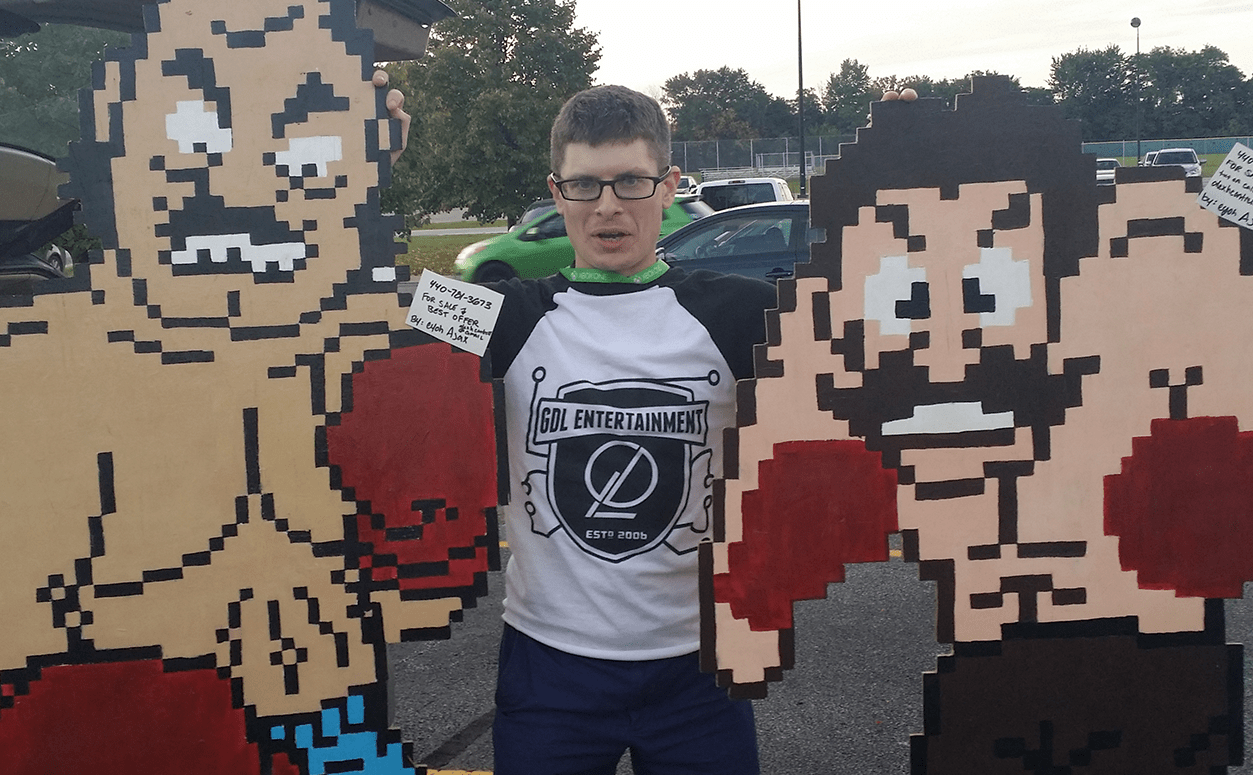
We made these life-size Punch-Out!! standees for an event 😉
You never knew where the simple love of something will take you.
For me, my love of playing Street Fighter and Mortal Kombat 1-on-1 arcade games — even practicing against the computer for hours since I was too little to be at an arcade every weekend — eventually brought me to huge tournaments where I learned to keep up with the best in the world, and even run my own international event for these games that meant so much to me!
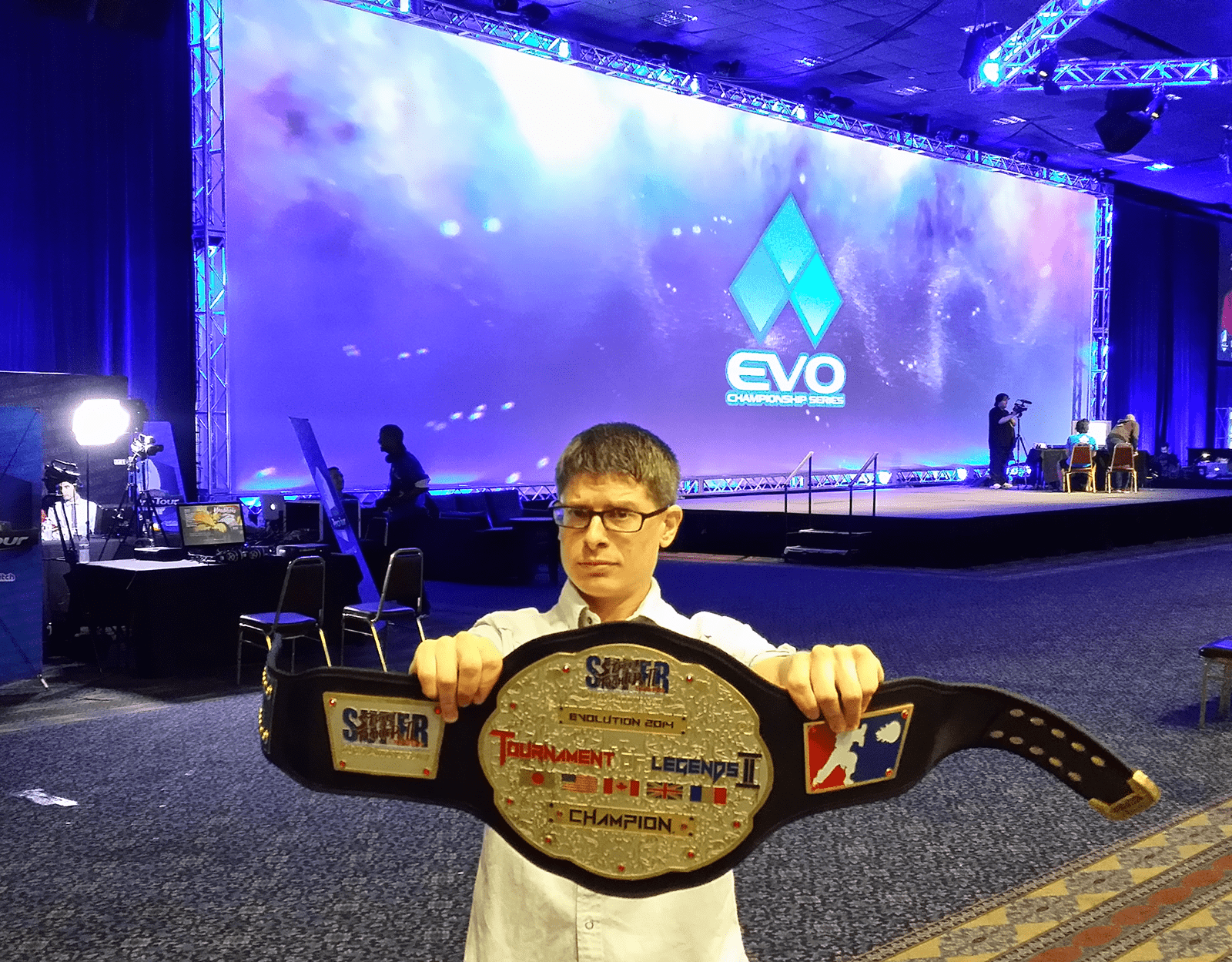 Running (and competing in too) the World Championships of Street Fighter II in 2012. For some reason we had the championship belt shipped to my house and I brought on the plane to Vegas with me.
And you have to be wired a certain strange way to take deathly serious a game where you step on a panel of four arrows in time to bizarre music — in public no less! — but my desire to excel at Dance Dance Revolution has motivated me to take care of my body and diet, eventually facilitating my physical and mental recovery from a brain tumor, and I still use it — I still need it — to push through physical and emotional adversity as I age. And not only have I been able to learn from the world’s best players, but I’ve made lifelong friends and am a part of a community that accepts and supports everyone, now matter how different, because we’re all misfits.
You’ve probably never seen competitive DDR before so prepare yourself.
I am proud to achieve something maybe only a few hundred in world, out of thousands and thousands of competitive DDR players — all much younger than me — could do.
Videogames have always helped me believe in myself, and they’ve always brought me to amazing people who also hold these shared experiences dear.
At a holiday party this past weekend (yes, in February), I got so happy seeing a five-year-old girl play original Super Mario Bros. on Nintendo with her mom, doing a great job moving Mario around and jumping over goombas and pits. That’s really impressive!
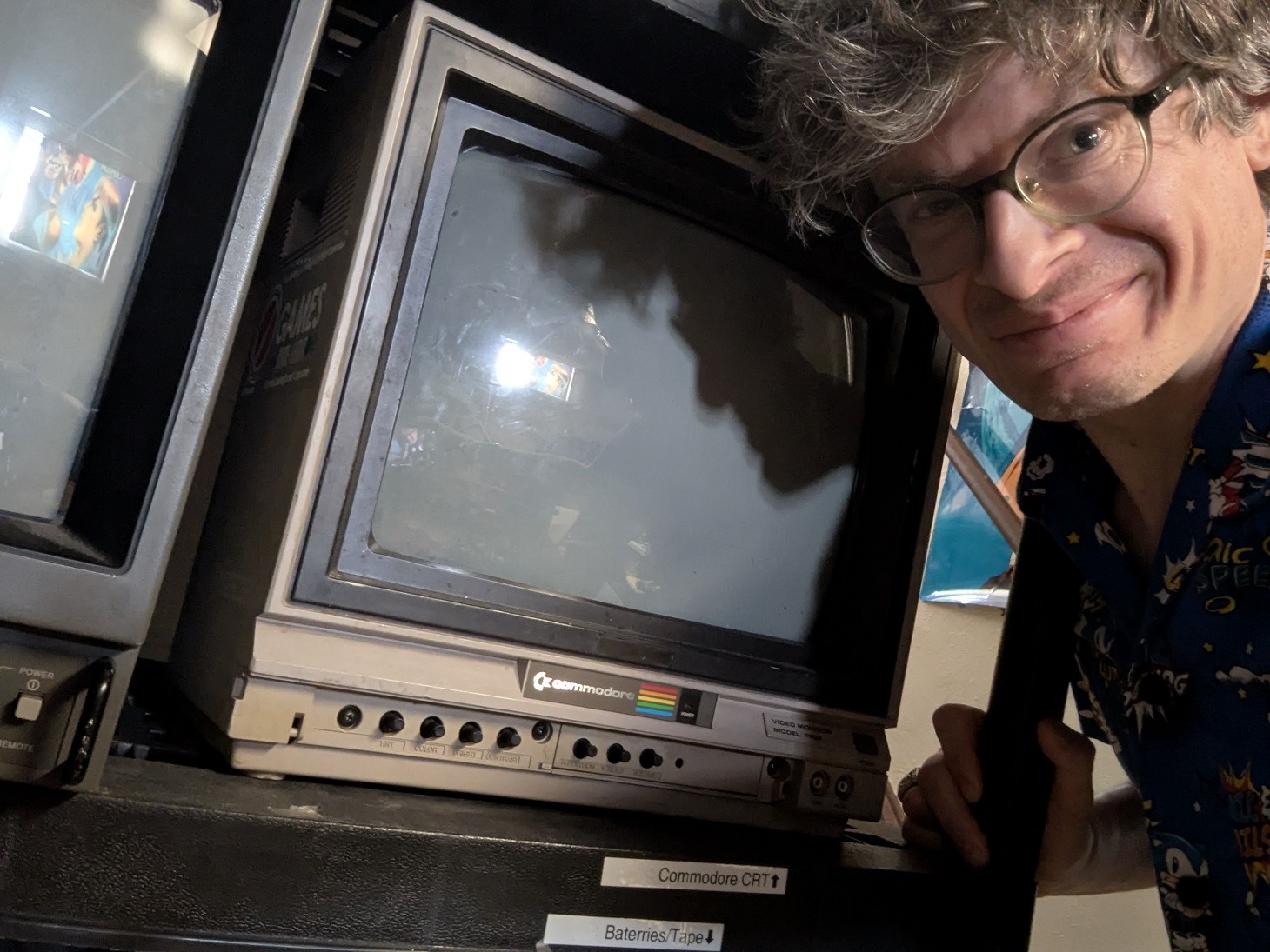
The little girl was playing Mario on this very Commodore 64 monitor, which was my great uncle’s and the first TV I ever played a serious videogame on. Grandpa took me over his house countless times to see the latest games!
Kids need to believe in themselves.
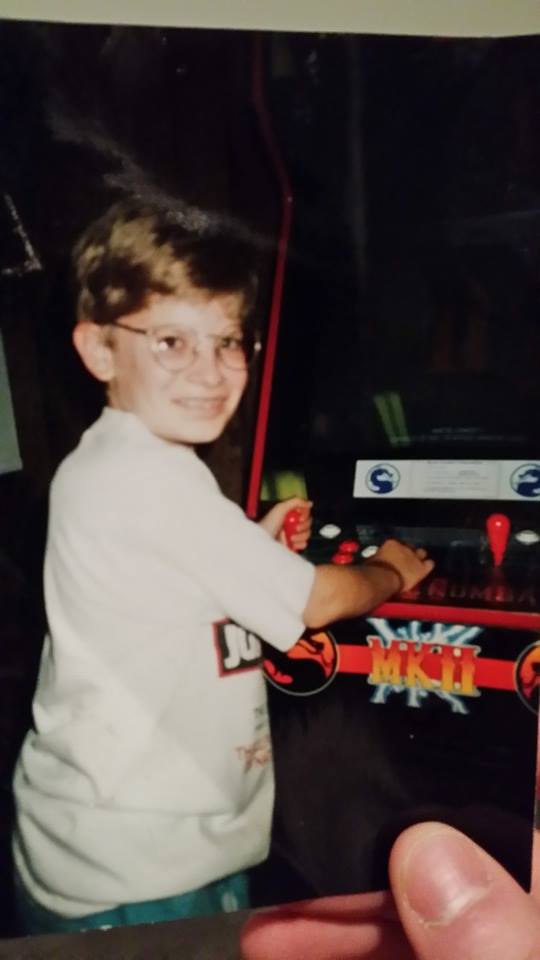
I had no idea I’d own one of these someday and get to take it all around for people to enjoy!!
So do we, as adults, which can be hard because we’re just supposed to look like we know exactly what we’re doing, all the time, no matter the situation.
We all need a little friendly competition and challenge with others, and with ourselves. It helps us learn, grow, understand and empathize with others, and see what we can do when we tell ourselves, “I’ll try one more time,” whether it’s getting back up on the ice after skinning our knee or hitting “start” on a Nintendo controller after we run out of continues.
I hope you enjoyed the Olympics not just as a spectator but in some small way take some of the stories and victories and bring it back to your own life.
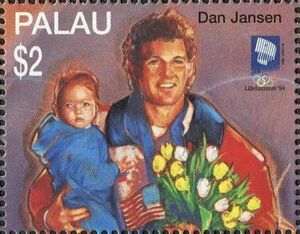
What a cool stamp!!
We can’t all be Olympic athletes or beat Mario games without dying. But I’m thankful that I’ve always had videogames in my life, and even when I’m sad or unmotivated, I’m so grateful when I can help others experience a fraction of these feelings I get from games, both Olympic and electronic!